

Neelum Valley: Location and Importance
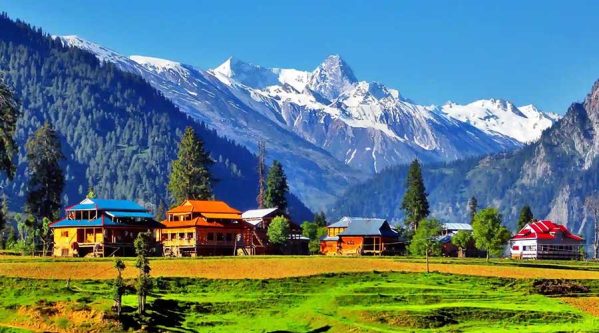
Neelum Valley is located in the northeastern region of Azad Kashmir, Pakistan. The valley is known for natural landscapes, cultural heritage, and historical trade routes. It runs parallel to the Kaghan Valley and lies within the mountainous system formed by the Himalayan, Karakoram, and Hindukush ranges.
The region attracts:
- tourists
- adventure travelers
- researchers
due to its alpine scenery, rivers, and historical sites.
The next section explains the geographical structure of the valley.
Geography of Neelum Valley
Where is Neelum Valley geographically located?
Neelum Valley lies in Azad Kashmir and is bordered by mountain peaks exceeding 4,000 meters (13,000 ft). The valley forms part of the greater Kashmir region, which includes Jammu, Kashmir, Ladakh, Baltistan, and Gilgit.
What geographical features define Neelum Valley?
- Steep valley slopes exceeding a 32° gradient
- Fertile alluvial soil supporting agriculture
- Dense forests, alpine meadows, and lakes
- The Neelum River, flowing centrally through the valley
Geological studies indicate that the Kashmir region was once a prehistoric lake known as Satisar, formed by seismic activity.
Which locations are geographically significant in Neelum Valley?
- Sharda – historical settlement
- Kel – largest town in the valley
- Ratti Gali Lake – approximately 14,000 ft elevation
- Shounter Lake – high-altitude alpine lake
The next section outlines the historical development.
Historical Development of Neelum Valley
What role did Neelum Valley play in regional history?
Neelum Valley functioned as a key segment of the Silk Route, connecting Central Asia with the Indian Subcontinent. Archaeological evidence indicates early human habitation and sustained settlement over centuries.
During the medieval period:
- trade caravans passed through the valley
- cultural exchange intensified
- forts and rest stations were established
The next section focuses on Sharada Peeth.
Sharada Peeth – Cultural and Religious Significance
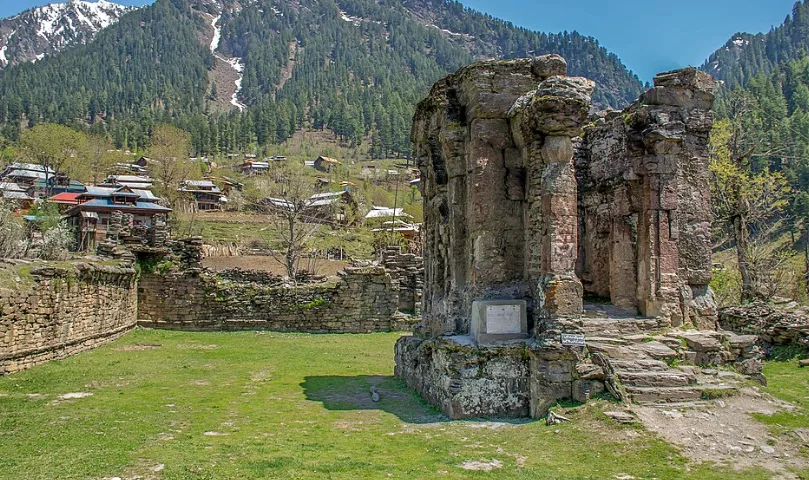
Is Sharada Peeth an ancient temple complex located in Neelum Valley?
Yes, Sharada Peeth is an ancient temple complex located in Neelum Valley.
Why is Sharada Peeth historically significant?
- Associated with the Suryavanshi dynasty
- Functioned as a center for scholarly debates
- Attracted scholars from distant regions
Natural disasters, political conflict, and long-term neglect led to structural collapse and limited restoration. The site remains a symbol of Kashmir’s intellectual heritage.
The next section explains imperial influences.
Influence of Empires on Neelum Valley
Which empires influenced the valley?
- Mughal Empire: used the region as a summer retreat; introduced gardens, forts, and mosques
- British colonial administration: implemented governance reforms and infrastructure development
Remaining structures reflect a blend of local and colonial architecture.
The next section describes demographics.
Demographics and Social Structure
What is the population of Neelum Valley?
What defines the local population?
- Indigenous communities
- Tribal social structures
- Strong oral traditions
What demographic challenges exist?
- Migration to Islamabad and Lahore
- Economic displacement due to conflict
- Limited healthcare and public services
Ethnobotanical studies show that women preserve most traditional medicinal plant knowledge, as men often migrate for work.
The next section examines the economy.
Economy of Neelum Valley
What supports the local economy?
The economy depends on:
- agriculture
- forest resources
- emerging tourism
Which agricultural products dominate?
- maize
- wheat
- rice
- apples and pears
Climate change and declining traditional farming practices negatively affect productivity and food security.
The next section discusses tourism.
Tourism and Attractions in Neelum Valley
Why is tourism increasing?
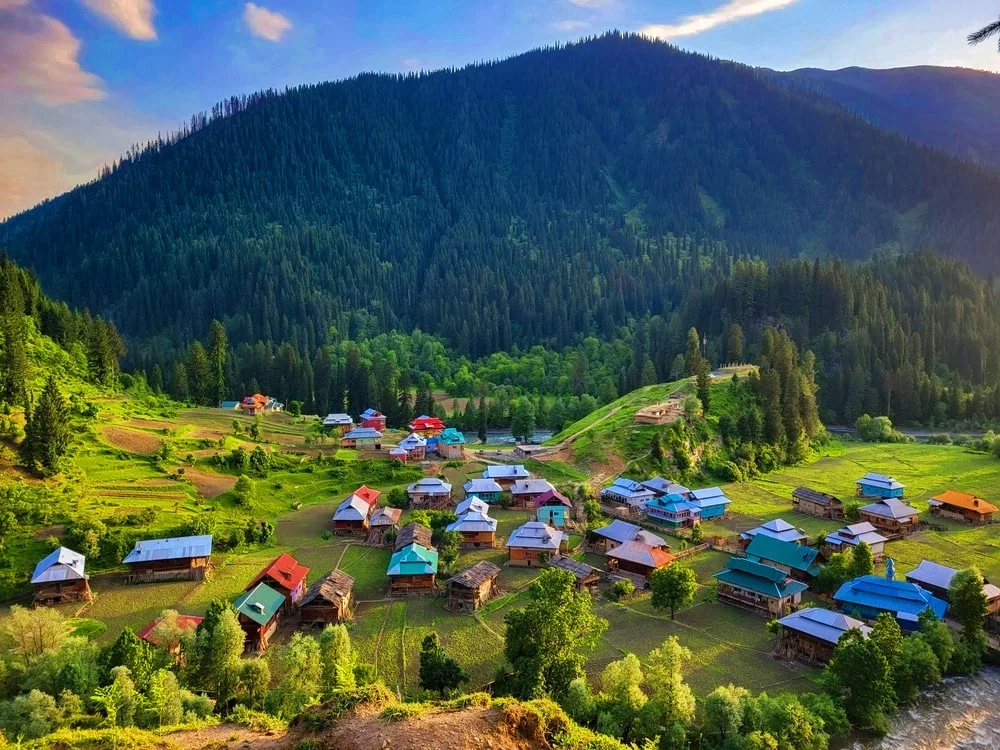
Improved security conditions after 2021 led to renewed tourist interest. Natural scenery and cultural heritage drive visitor demand.visitors now choose a Neelum Valley tour to explore remote areas with structured itineraries and local guidance.
Natural attractions
Lakes
- Ratti Gali Lake
- Shounter Lake
- Hariparbat Lake
- Saraswati Lake
Trekking and hiking
- Baboon Valley
- alpine trekking routes
- off-road mountain passes
Cultural activities
- Horse and Cattle Shows
- tent pegging events
- literary festivals
Popular scenic locations
- Keran – riverbank picnic area
- Leepa Valley – terraced fields and orchards
The next section explains transportation.
Transportation and Accessibility
How do travelers reach Neelum Valley?
Primary access route:
- Islamabad → Murree Road → Muzaffarabad → Neelum Valley
What transportation challenges exist?
- Limited road infrastructure
- Frequent use of 4×4 vehicles
- Safety risks near the Line of Control (LoC)
Local transport includes:
- jeeps
- off-road vehicles
- chairlift service from Kel
Weather conditions strongly influence road accessibility.
The next section addresses conservation.
Environmental Conservation in Neelum Valley
What environmental threats exist?
- deforestation
- overgrazing
- habitat degradation
- climate change
At least 16 plant and animal species face local threat.
Which species are ecologically important?
- Himalayan Musk Deer
- Brown Bear
- Taxus baccata (source of Taxol)
- endemic alpine plant species
Why is community involvement critical?
Local communities depend on:
- forest resources
- wild medicinal plants
- traditional ecological knowledge
Current conservation efforts promote:
- biogas systems
- solar cookstoves
- education-based sustainability programs
Education and awareness remain essential for long-term environmental protection.