

What Is Panjpeer Rocks and Why Is It Famous?
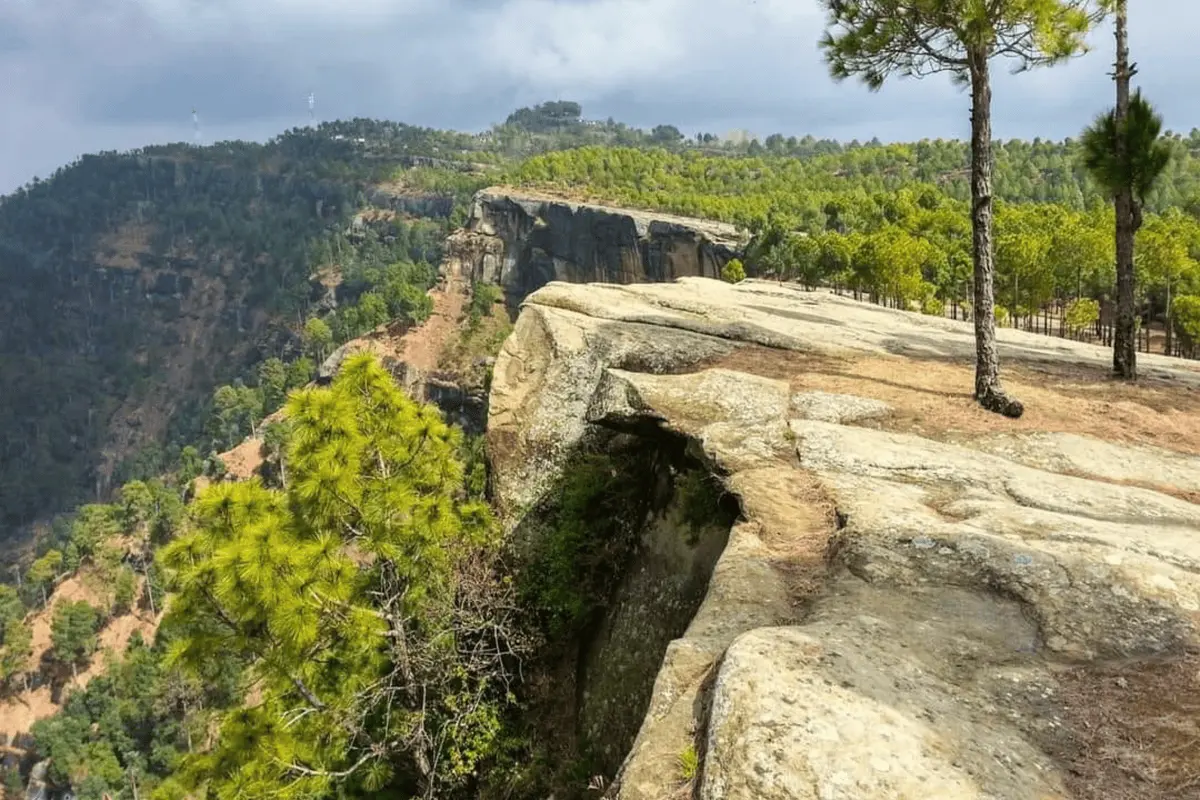
Panjpeer Rocks is a sacred sandstone plateau in Kotli Sattian, Pakistan, known for its shrine linked to five Sufi saints and its 360-degree mountain views.
Panjpeer Rocks sits on the Danoi Ridge in the Himalayan foothills. The site combines:
- spiritual heritage,
- elevated rock formations,
- and ecotourism appeal.
The name Panjpeer directly refers to the Panj Pīr (Five Saints) tradition rooted in South Asian Sufism. The plateau attracts pilgrims, hikers, photographers, and domestic tourists seeking non-commercial mountain destinations.
Where Is Panjpeer Rocks Located?
Panjpeer Rocks is located near Narar village in Kotli Sattian Tehsil, Rawalpindi District, Punjab, Pakistan.
Exact Location Attributes
- Coordinates: 33°43′59″N, 73°31′56″E
- Elevation: ~1,800 meters (5,905 feet)
- Administrative overlap: Kahuta Tehsil and Kotli Sattian
- Nearest village: Narar
The ridge connects Kahuta and Kotli Sattian, which explains frequent location confusion in search queries.
From the summit, you see:
- Jhelum River to the east,
- Murree and Patriata hills to the west,
- snow-covered Himalayan peaks on clear days.
Panjpeer Rocks History, Shrine, and the Five Saints
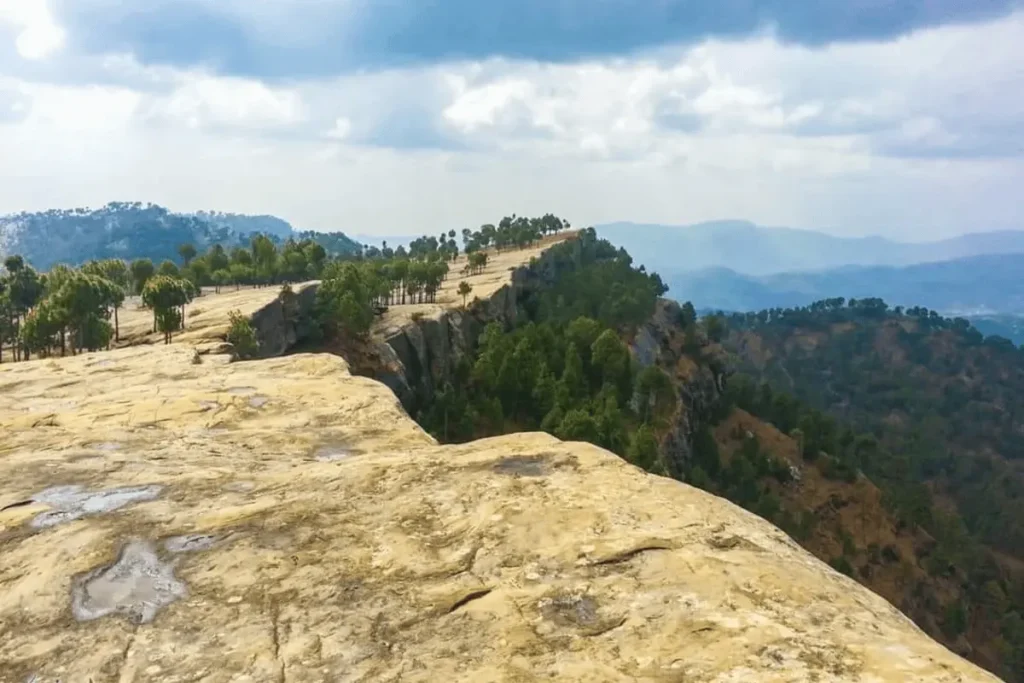
Panjpeer Rocks is spiritually significant due to oral traditions linking the site to five Sufi saints who meditated on the plateau centuries ago.
Who Are the Panj Peer?
The Panj Pīr tradition appears across Punjab and North India. In Panjpeer Rocks folklore, the saints performed chilla (spiritual retreat) on this isolated ridge.
Commonly associated saints include:
- Khwaja Moinuddin Chishti (Ajmer)
- Qutbuddin Bakhtiar Kaki (Delhi)
- Baba Farid Ganjshakar (Pakpattan)
- Bahauddin Zakariya (Multan)
- Lal Shahbaz Qalandar (Sehwan)
Local narratives sometimes substitute regional saints, which reflects oral-history variation rather than contradiction.
The Shrine (Ziarat)
- The site contains no graves.
- It functions as a baithak (resting place).
- Stone engravings believed to represent sacred footprints exist at the summit.
- Visitors maintain silence and respect regardless of religious background.
Panjpeer Rocks Distance from Islamabad
Panjpeer Rocks is approximately 70–75 km from Islamabad, with a travel time of 2.5 to 3 hours.
Distance Matrix
| Origin | Distance | Time | Vehicle |
|---|---|---|---|
| Islamabad → Kahuta | 35 km | ~50 min | Any car |
| Kahuta → Narar | 30 km | ~75 min | SUV |
| Narar → Panjpeer | 5 km | ~30 min | 4×4 only |
Road condition, not distance, determines travel time.
How to Reach Panjpeer Rocks from Islamabad
You reach Panjpeer Rocks either via Kahuta–Narar or Lehtrar–Danoi routes, depending on vehicle and preference.
Route A: Kahuta → Narar (Direct)
- Faster on map
- Road severely damaged after Ratta Galla
- Final ascent requires 4×4
Route B: Lehtrar → Danoi (Scenic)
- Better paved access
- Ends at Danoi Forest Rest House
- 5 km jeep track or hike to summit
Recommendation:
If you do not own a 4×4, park at Danoi and hike.
Panjpeer Rocks Hiking Guide
Panjpeer Rocks offers moderate hiking suitable for beginners with basic fitness.
Danoi Forest Trek
- Duration: 2–3 hours one way
- Elevation gain: ~500 meters
- Terrain: Pine forest, dirt track
- Difficulty: Moderate
Narar Ridge Walk
- Duration: 45–60 minutes
- Difficulty: Easy
- Best for: Families, campers
Safety Rules
- Carry 2–3 liters of water
- Wear hiking boots (sandstone is slippery)
- Maintain distance from cliffs (no guardrails)
- Use a local guide if unfamiliar
Panjpeer Rocks Weather and Best Time to Visit
April to October is the best time to visit Panjpeer Rocks due to stable weather and safe access.
Seasonal Breakdown
- Spring (Mar–May): 15–25°C, best hiking
- Summer (Jun–Aug): Cool retreat, monsoon risks
- Autumn (Sep–Nov): Clear views, ideal photography
- Winter (Dec–Feb): Snowfall, access difficult
Monthly Temperature Snapshot
| Month | Avg High | Avg Low |
|---|---|---|
| Jan | 10°C | −2°C |
| May | 25°C | 14°C |
| Jul | 28°C | 18°C |
| Oct | 22°C | 10°C |
Narar Waterfall and Nearby Places
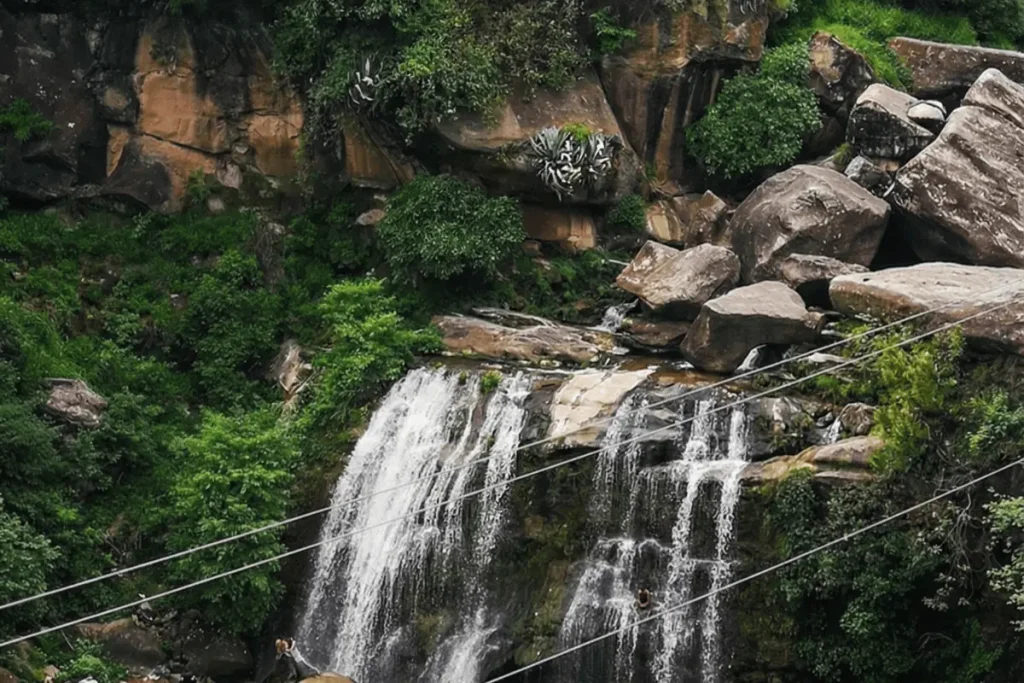
Narar Waterfall is the most visited nearby attraction and pairs well with a Panjpeer day trip.
Narar (Narh) Waterfall
- Rock-fed cascade into deep pool
- Access requires short hike
- Swimming is unsafe due to depth
Other Nearby Entities
- Manjan Lake
- Danoi Forest Rest House (1928)
- Kotli Sattian viewpoints
Is Panjpeer Rocks Haunted? Myths vs Reality
There is no verified evidence that Panjpeer Rocks is haunted.
The belief originates from:
- wind acoustics,
- forest isolation,
- spiritual association with saints.
Panjpeer Rocks Tours vs Self-Drive
Guided tours provide higher safety, while self-drive offers flexibility at higher risk.
| Feature | Tour | Self-Drive |
|---|---|---|
| Cost | PKR 3,000–6,000 | Fuel + wear |
| Vehicle | Included 4×4 | Must own 4×4 |
| Stress | Low | High |
| Flexibility | Limited | High |
Why Panjpeer Rocks Matters
Panjpeer Rocks connects:
- Himalayan geology,
- Sufi spiritual anthropology,
- emerging ecotourism.
The site faces infrastructure neglect, yet its raw character defines its appeal. Sustainable access without over-commercialization remains essential.
You experience Panjpeer fully when you respect the terrain, the shrine, and the local ecosystem.