

You have seen the photos.
The glowing turquoise lakes.
The snow-covered peaks touching the sky.
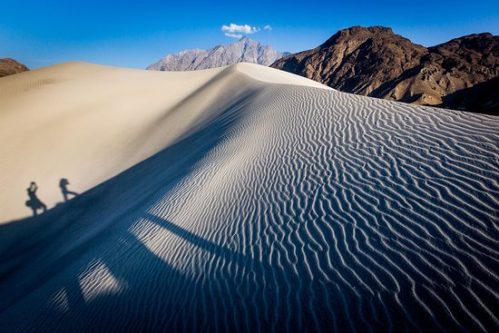
Even the sand dunes sitting beside giant mountains.
And you wonder, “Is Skardu really like this?”
The truth is simple:
The photos cannot show its real beauty.
Skardu is not just another place in the mountains.
It is a land where the world’s second-highest peak stands like a silent guardian.
Where huge glaciers carve deep, peaceful valleys.
Where you can sit by a clear lake in the morning… and cross golden desert dunes in the afternoon.
It sounds impossible, but this is Skardu.
At 7,218 feet above sea level, in Pakistan’s Gilgit-Baltistan region, Skardu offers something rare—extreme beauty that any traveler can reach.
It does not matter who you are.
If you want stunning photos, Skardu gives them to you.
If you want adventure, Skardu is ready.
Even the path to K2 Base Camp begins here.
Now, let me take you through the best places to visit in Skardu—
and show you why each spot has the power to change the way you see this world.
What Makes Shangrila Resort the Most Iconic Spot in Skardu?
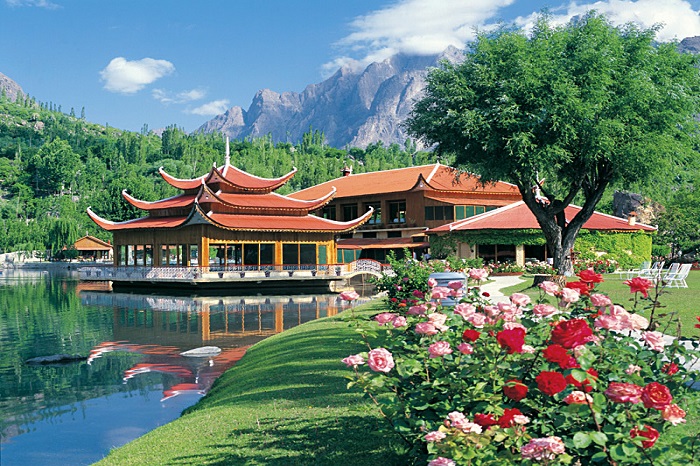
Shangrila Lake is Skardu’s crown jewel—and for good reason. The lake itself is stunning: heart-shaped, crystal-clear, surrounded by peaks that look like they’ve been painted onto the sky.
What you’ll experience here:
- Boating across waters so clear you can see the bottom
- Photography that’ll make your friends back home jealous
- Peaceful alpine air perfect for meditation or just…breathing
- Easy access—only 30 minutes from Skardu city center
The water gets its turquoise color from glacial silt. When the sun hits it just right (around 6-8 AM), the entire scene glows golden.
Your best bet? Visit in September or October. The crowds thin out, the weather stays perfect, and you get those clear blue skies photographers dream about.
Read More: Skardu Tour
Why Do Photographers Call Deosai “The World’s Most Beautiful Plateau”?
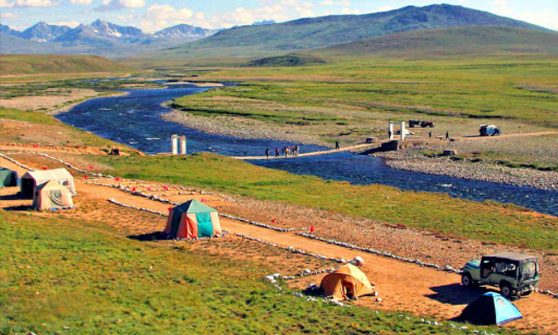
Imagine standing on a vast plateau, 13,500 feet above sea level.
Wildflowers in purple, yellow, and pink stretch to the horizon. Snow-capped peaks surround you on all sides. Himalayan brown bears roam freely. Eagles soar overhead.
This is Deosai National Park and it’s like nothing else on Earth.
Scientists call it the world’s second-highest plateau. Locals call it “the roof of the world.” and You will call it magical.
Here’s what makes Deosai extraordinary:
During July and August, the plateau transforms into a living canvas. Purple asters cover entire hillsides. Yellow buttercups dot the meadows. Pink alpine roses cling to rocky slopes.
And the wildlife? You might spot one of the 60-100 Himalayan brown bears that live here. Don’t worry,with proper guides, you’re perfectly safe. The bears are more interested in roots and berries than tourists.
Marmots pop up from their burrows. Blue sheep navigate impossible cliff faces. Golden eagles circle above, riding thermal currents.
But here’s the catch: Deosai is only open mid-June through September.
The rest of the year? Buried under 10-15 feet of snow.
This limited window makes it precious. When you visit during peak wildflower season, you’re witnessing something that exists for just 8-10 weeks annually.
Insider tip: Come in early September. The wildflowers are still blooming, the weather is stable, and the best part—the crowds disappear. You’ll have vast stretches of this 3,000-square-kilometer park almost to yourself.
Pack warm layers. Even in summer, temperatures can drop to near-freezing at night.
What Makes K2 Base Camp Trek the Ultimate Adventure?
Let’s be honest: This isn’t for everyone.
The K2 Base Camp Trek is extreme. It’s demanding. It requires 18-20 days, serious fitness, and mental toughness.
But if you can do it? It’s the adventure of a lifetime.
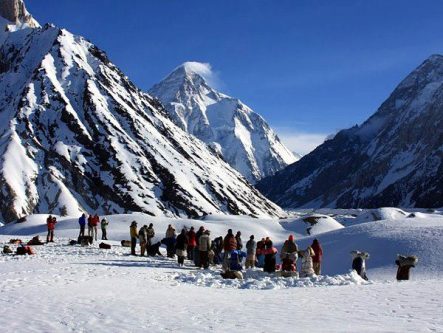
You’ll trek 160 kilometers round-trip. Cross the 62-kilometer Baltoro Glacier one of the world’s longest outside polar regions. Reach Concordia, where four massive glaciers meet and you’re surrounded by 360-degree mountain views.
Then comes the final push: K2 Base Camp at 16,900 feet.
Standing there, looking up at the “Savage Mountain” rising another 11,000 feet above you, is indescribable. Many trekkers cry. Not from exhaustion (though there’s that too), but from the sheer overwhelming beauty and achievement.
What you need to know:
This trek is rated 9 out of 10 in difficulty. You’ll hike 5-8 hours daily for 12+ consecutive days. You’ll sleep in tents. You’ll face altitude challenges, unpredictable weather, and terrain that tests every muscle.
Preparation is everything:
- Train for 6 months minimum
- Build your hiking endurance with 15-20 km hikes weekly
- Practice with a weighted backpack
- If possible, summit a 13,000+ foot peak before attempting this
About 75-80% of trekkers complete the journey successfully. The ones who don’t usually turn back due to altitude sickness or recognizing their limits—which is smart, not failure.
Best time: July offers the most stable weather, though it’s crowded. June gives you more solitude but less predictable conditions.
Cost: Expect to invest $3,000-6,000 for the full expedition, including guides, porters, permits, and gear.
Is it worth it? Ask anyone who’s done it. The answer is always yes.
How Is Satpara Lake Different from Shangrila?
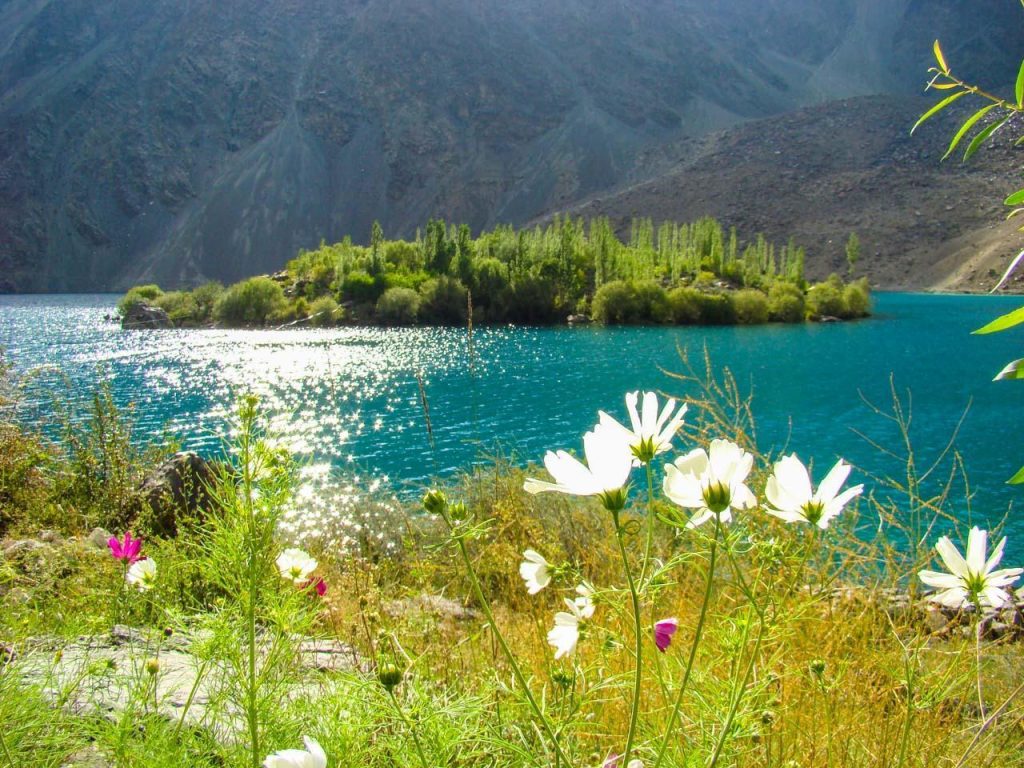
Think of Satpara as Shangrila’s quieter, more contemplative cousin.
No airplane restaurants here. No resort amenities. Just raw, peaceful mountain beauty.
Located just 9 kilometers south of Skardu, Satpara Lake offers what busy Shangrila sometimes can’t: solitude.
The lake sits at 8,500 feet, fed by glacial melt from the Deosai Plains. That means the water is crystal-clear and yes, freezing cold (8-12°C even in summer).
What makes Satpara special:
It’s a working lake. Locals fish here—brown and rainbow trout thrive in these cold waters. The Satpara Dam provides water for the entire Skardu valley.
But it’s also incredibly beautiful.
Your experience here:
- Try your hand at trout fishing—spring and fall are best
- Pack a picnic and find a quiet shore spot
- Watch sunset paint the surrounding peaks orange and pink
The photography here rivals Shangrila, especially on cloudy days when atmospheric mist rolls across the water.
Pro tip: Visit early morning (7-9 AM). The lake is glassy-smooth, creating perfect mirror reflections of the mountains. Plus, you’ll likely have it almost to yourself.
Why Does the Cold Desert Feel Like Another Planet?
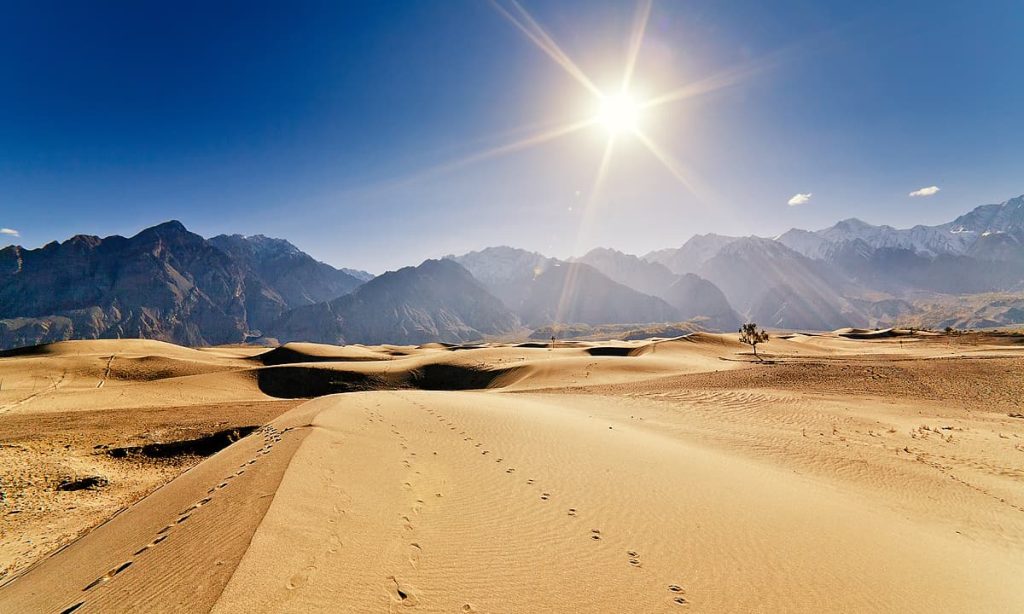
Desert + Snow-capped Mountains = Does Not Compute.
Your brain will struggle with this one.
The Katpana Cold Desert sits 25 kilometers south of Skardu, and it defies logic. Golden sand dunes roll across the landscape. In the background? K2 and the Karakoram peaks, covered in snow.
This geographical contradiction exists due to extreme aridity and unique wind patterns that create desert conditions at 7,200+ feet elevation.
What you can do here:
Jeep safaris are the main attraction. Professional drivers navigate the dunes, stopping at prime photo spots. The contrast of sand and snow creates surreal images you won’t find anywhere else on Earth.
The Sarfaranga Desert Jeep Rally happens every August. Over 200 participants race across a 54-kilometer track through the dunes. It’s three days of motorsports, camping, food vendors, and mountain culture colliding in the best possible way.
Night sky photography here is phenomenal. With minimal light pollution and high altitude, you’ll see stars like never before. The Milky Way stretches across the sky in vivid detail.
When to visit: May through October. Summer afternoons can hit 80°F, while nights drop to 40-50°F. Pack layers.
Critical warning: Never visit November through March. Nighttime temperatures plunge below -4°F. Hypothermia risk is real and dangerous.
What’s the Best Time to Visit Skardu?
Here’s the simple truth: September and October are magic.
You get clear blue skies. Comfortable temperatures (50-75°F). Manageable crowds. And reasonable prices.
July and August offer peak weather—but you’ll battle crowds everywhere and pay premium prices. If you don’t mind company, these months work great.
Avoid winter unless you’re an extreme cold-weather enthusiast. November through February means temperatures of 20°F or colder, roads blocked by snow, and most attractions completely shut down.
Season-by-season breakdown:
Spring (March-May): Roads clearing, weather unpredictable, wildflowers beginning. Good for adventurous travelers who don’t mind uncertainty.
Summer (June-August): Everything’s open, weather is warmest, perfect for trekking. Downside: crowds and peak pricing.
Autumn (September-October): The sweet spot. Clear skies, fewer tourists, ideal temperatures, and stunning photography light.
Winter (November-February): For rare enthusiasts only. Most attractions closed, extreme cold, serious safety risks.
Read More: Skardu Weather Guide
How Do You Actually Get to These Places?
Good news: You don’t need mountaineering skills to visit most Skardu attractions.
From Skardu city:
- Shangrila Lake: 20 km, 30 minutes, paved road
- Satpara Lake: 9 km, 20 minutes, paved road
- Cold Desert: 25 km, 30 minutes, mixed roads
- Deosai entrance: 50+ km, 2-3 hours, mountain roads
Vehicle recommendations:
For Shangrila and Satpara, any car works. For Deosai and remote areas, you need a 4×4 jeep. The roads aren’t always paved, and ground clearance matters.
Should you hire a guide?
For day trips to Shangrila or Satpara? Not necessary.
For Deosai or the K2 trek? Absolutely essential.
Guides provide:
- Real-time weather updates
- Safety expertise for altitude and emergencies
- Cultural knowledge and authentic experiences
- Emergency communication capability
Want a stress-free adventure?
Let PakAdventure handle it for you. Our expert guides, reliable drivers, and 4×4 jeeps make your Skardu and Deosai trips safe, smooth, and unforgettable. Book now and explore worry-free!
What Should You Know About Altitude Safety?
This is serious. Don’t skip this section.
Skardu sits at 7,218 feet. Deosai reaches 13,500 feet. K2 Base Camp hits 16,900 feet.
At these elevations, oxygen availability drops significantly. Your body needs time to adjust.
Altitude sickness symptoms:
Mild (affects 60-70% of visitors):
- Headache
- Mild nausea
- Fatigue
- Dizziness
- Trouble sleeping
Severe (requires immediate attention):
- Severe headache that won’t respond to medication
- Persistent vomiting
- Extreme confusion
- Shortness of breath while resting
- Inability to walk straight
How to prevent altitude sickness:
- Spend 2-3 days in Skardu before going higher
- Drink 3-4 liters of water daily (more than normal)
- Ascend slowly—no more than 1,600 feet elevation gain per day above 10,000 feet
- Eat carb-heavy meals—they’re easier for your body to process
- Consider Diamox—consult your doctor about this medication that reduces altitude sickness risk by 50-75%
If symptoms develop: Rest, hydrate, take pain medication. If symptoms worsen, descend immediately.
This isn’t optional. Altitude sickness can become life-threatening if ignored.
Ready to Experience Skardu’s Magic?
Here’s what you now know:
Skardu offers everything from accessible lake visits to extreme mountaineering. You can experience turquoise waters and mountain peaks in the morning, desert dunes by afternoon, and star-filled skies at night.
Your next steps:
- Choose your timing: Book for September-October for the best experience
- Select your attractions: Start with Shangrila and Satpara for easy acclimatization
- Arrange guides: For Deosai or K2 trek, book reputable operators now
- Prepare properly: If doing altitude activities, start training and get medical clearance
The mountains are waiting. The lakes are calling. The adventure of a lifetime is closer than you think.
Don’t wait for “someday.” Skardu experiences sell out during peak season. Guided treks book months in advance.
Start planning your Skardu adventure today—because photos can’t capture what standing at K2 Base Camp feels like. Or how the sunrise over Shangrila takes your breath away. Or why Deosai’s wildflowers will move you to tears.
Some places change you. Skardu is one of them.
Ready to book your Skardu adventure? Contact Pak adventure team or drop us a message for personalized itinerary recommendations based on your interests, fitness level, and budget.